We all have stories we almost don't tell.
Maybe because they're embarrassing. Too painful. Too personal. Or because we've convinced ourselves they aren't important enough to share.
But what if the power isn't in the story itself? What if the power is in choosing to become the storyteller?
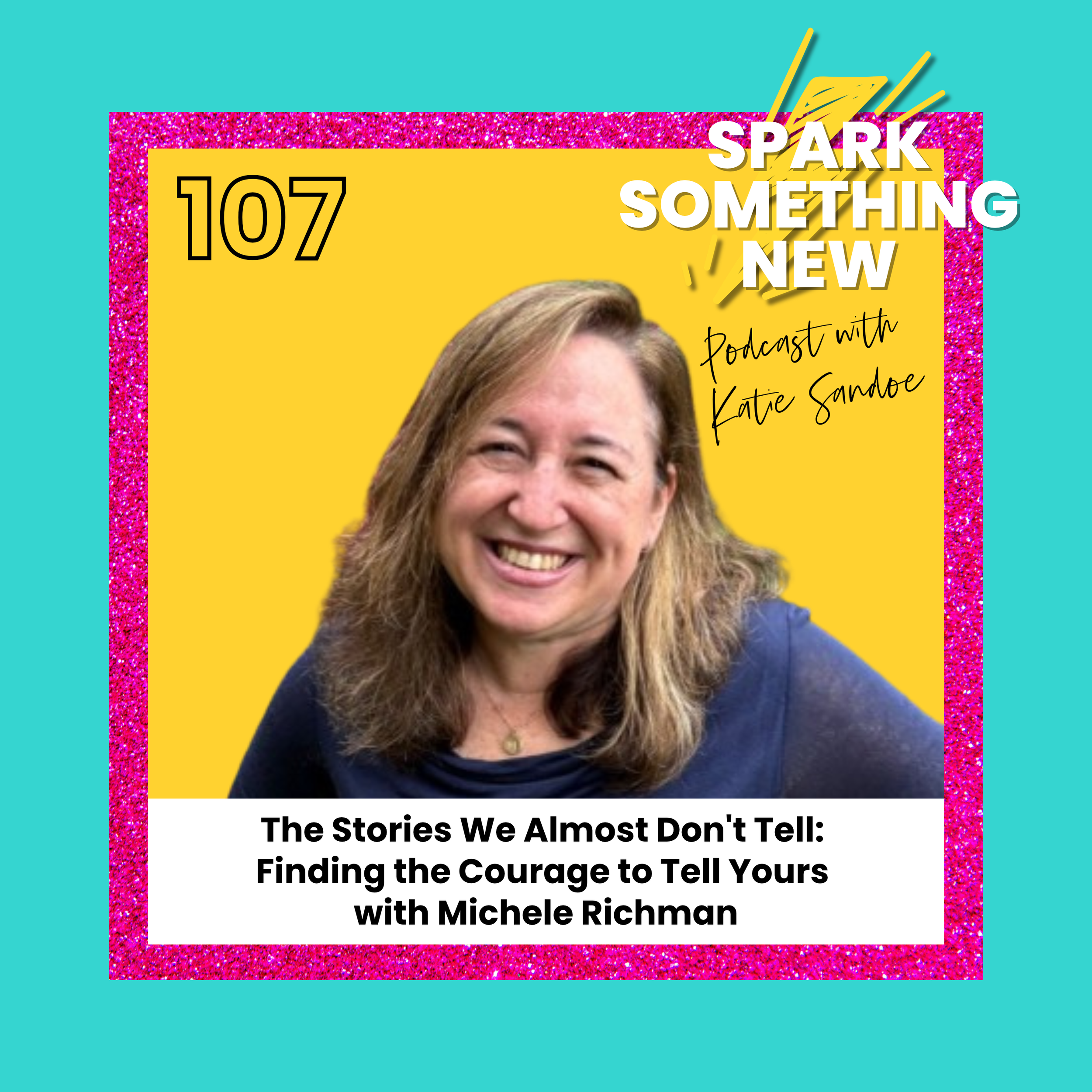
In this episode of Spark Something New, Katie sits down with Michele Richman, author of The Stories We Almost Don't Tell: Finding the Courage to Tell Yours, to explore how telling our stories helps us make meaning of our experiences, understand ourselves, and connect with others.
From childhood experiences and embarrassing moments to grief, motherhood, and unexpected adventures, Michele shares how writing about her life transformed the way she sees herself—and helped others feel less alone.
Together, they explore why we hold stories back, how experiences shape our identities, and why telling our truth doesn't mean telling everyone everything.
You don't need to write a book or share your deepest secrets to experience the power of storytelling.
Sometimes it starts with one memory, one meaningful object, or one story shared with someone you trust.
Because your stories don't have to be extraordinary to be worth telling.
Key Learnings:
1. Your stories are worthy because they're yours.
We often believe our experiences aren't interesting or significant enough to share. But storytelling isn't about impressing others. It's about recognizing that our experiences matter.
2. Telling our stories helps us make meaning of our lives.
Writing, reflecting, and sharing help us see experiences differently. Sometimes we don't recognize what something taught us until we put it into words.
3. Stories create connection, not just understanding.
Sharing something personal allows others to see us more fully. And our vulnerability often gives someone else permission to share, creating moments of shared humanity.
4. You decide how, when, and with whom you share.
Not every story needs a public audience. Michele distinguishes between writing to process, sharing with someone, and intentionally storytelling for an audience. Each serves a different purpose.
5. Start small. The extraordinary lives in the ordinary.
A photograph. A piece of jewelry. A childhood memory. Even purple hair! Everyday experiences can reveal something meaningful about our identity and evolution. Just start with a story.
A LITTLE SPARK TO TAKE WITH YOU:
Choose one object in your home that holds a meaningful memory. Ask yourself:
What's the story behind this object?
Why does this memory matter?
What does it reveal about who I am or who I've become?
Then, take Michele's advice: Start small. Write about it. Record a voice memo. Or share it with someone you trust. You might be surprised by what you discover—and the connection it creates.
LINKS & RESOURCES:
Michele's Book: The Stories We Almost Don't Tell: Finding the Courage to Tell Yours
Michele's Website: MicheleRichman.com
Connect with Michelle: LinkedIn
GUEST INFO:
Michele Richman is an author, leadership coach, speaker, and Chief People Officer and Lead Coach at Lawline, where she supports leadership and professional development.
With a background in law and coaching, Michele brings a unique perspective to personal storytelling.
Her book, The Stories We Almost Don't Tell, grew from writing about everyday experiences, family, identity, and grief. What began as personal reflection became a powerful way to connect with others.
Through her writing and work, Michele encourages people to embrace their experiences, find meaning, and discover the courage to share their stories.