Episode 81: The Addictions We Don’t Talk About | Reclaiming Agency in a World Designed to Keep Us Hooked with Dr. Mitika Kanabar
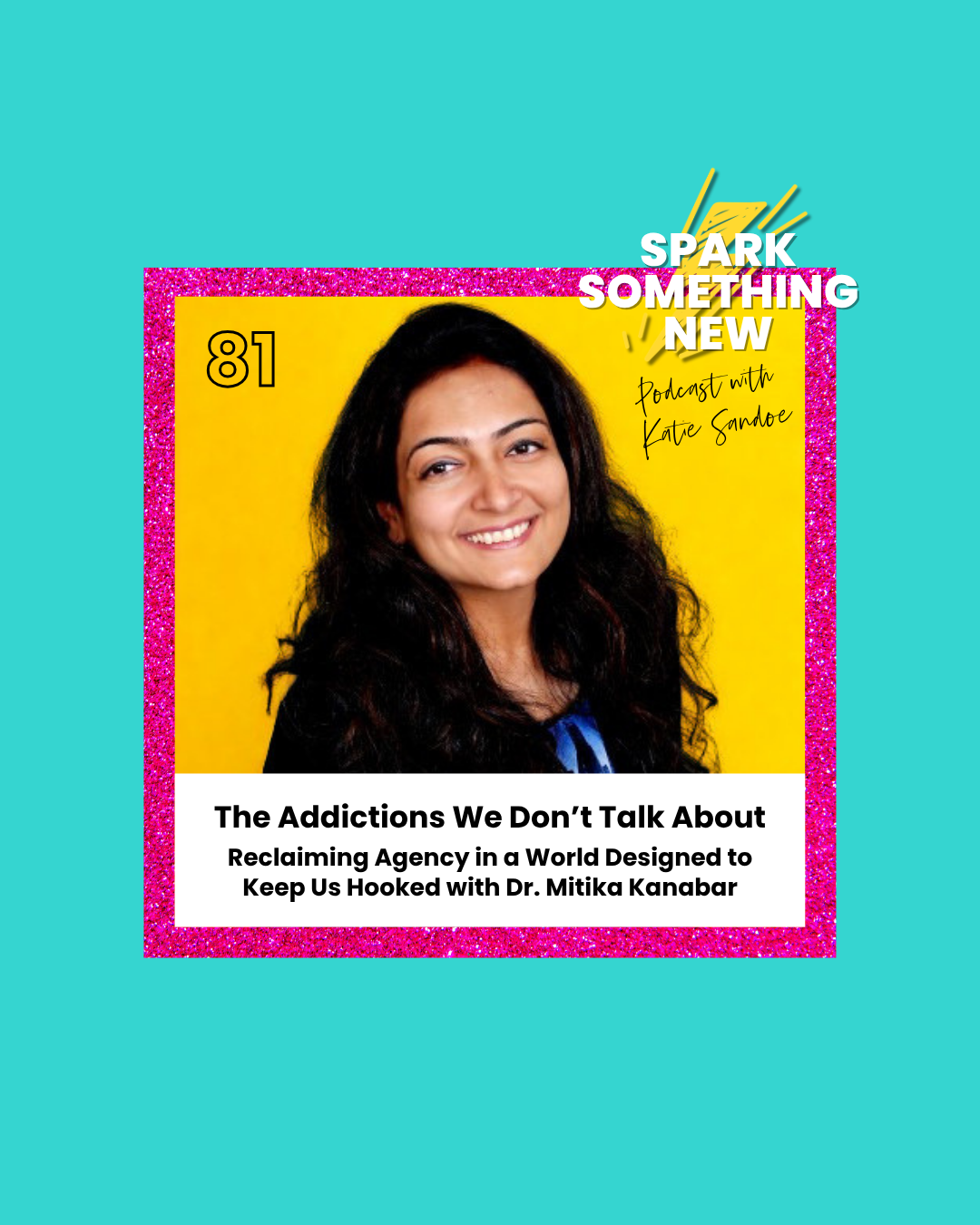
Episode Snapshot:
What if the issue isn’t that we lack discipline but that we’re living in a world intentionally designed to keep us hooked? In this episode, Dr. Katie Sandoe chats with Stanford-trained addiction medicine physician Dr. Mitika Kanabar to explore the growing reality of behavioral (or non-substance) addiction, which includes everything from social media, to binge-watching TV shows, to gaming, to shopping, to AI, and online gambling. Together, they unpack why awareness alone often isn’t enough to change behavior, how dopamine-driven systems shape our habits, and what it looks like to reclaim our personal agency in a world built around constant stimulation.
Summary:
Many of us know we’re spending too much time on screens, scrolling social media, checking work email, binge-watching shows, or chasing the next notification. But knowing something isn’t healthy and actually changing it are two very different things. In this conversation, Katie and Mitika explore why behavioral addictions are so difficult to break and why the answer is far more nuanced than simply “having more willpower.”
Drawing from both modern neuroscience and Eastern wisdom traditions, Mitika shares compassionate and practical ways people can begin rebuilding healthier relationships with technology, stimulation, and themselves. Rather than approaching change through shame or rigid perfectionism, she encourages listeners to begin with awareness, acceptance, intentional boundaries, and reconnecting the mind and body through presence-based practices.
Key Learnings:
Behavioral addictions activate many of the same brain reward systems as substance addictions.
Social media, gaming, and online gambling are intentionally designed around “variable reward” psychology.
Overuse is often connected to stress, loneliness, boredom, emotional overwhelm, and disconnection.
Addiction is marked by patterns like craving, compulsive behavior, loss of control, and continued use despite consequences.
Awareness without shame is essential for meaningful change.
Small boundaries—like delaying social media use in the morning or practicing “digital fasting”—can create significant shifts in wellbeing.
Eastern practices like mindfulness, breathwork, and yoga are about far more than relaxation; they help reconnect the mind and body.
Online gambling among teens is increasing rapidly and often goes unnoticed by parents.
Healing begins with compassionate awareness and intentional choices, not perfection.
Resources:
Connect with Mitika on LinkedIn
Visit Mitika's website: https://mitikakanabar.com/
Guest Info:
Dr. Mitika Kanabar is a Stanford-trained addiction medicine physician, speaker, and educator whose work focuses on helping people better understand behavioral health, technology overuse, and the deeper patterns that shape how we cope, connect, and live. Drawing from both modern psychology and Eastern wisdom traditions, she specializes in helping individuals navigate behavioral and non-substance addictions—including social media, gaming, online gambling, and digital overuse—with greater awareness, compassion, and agency.