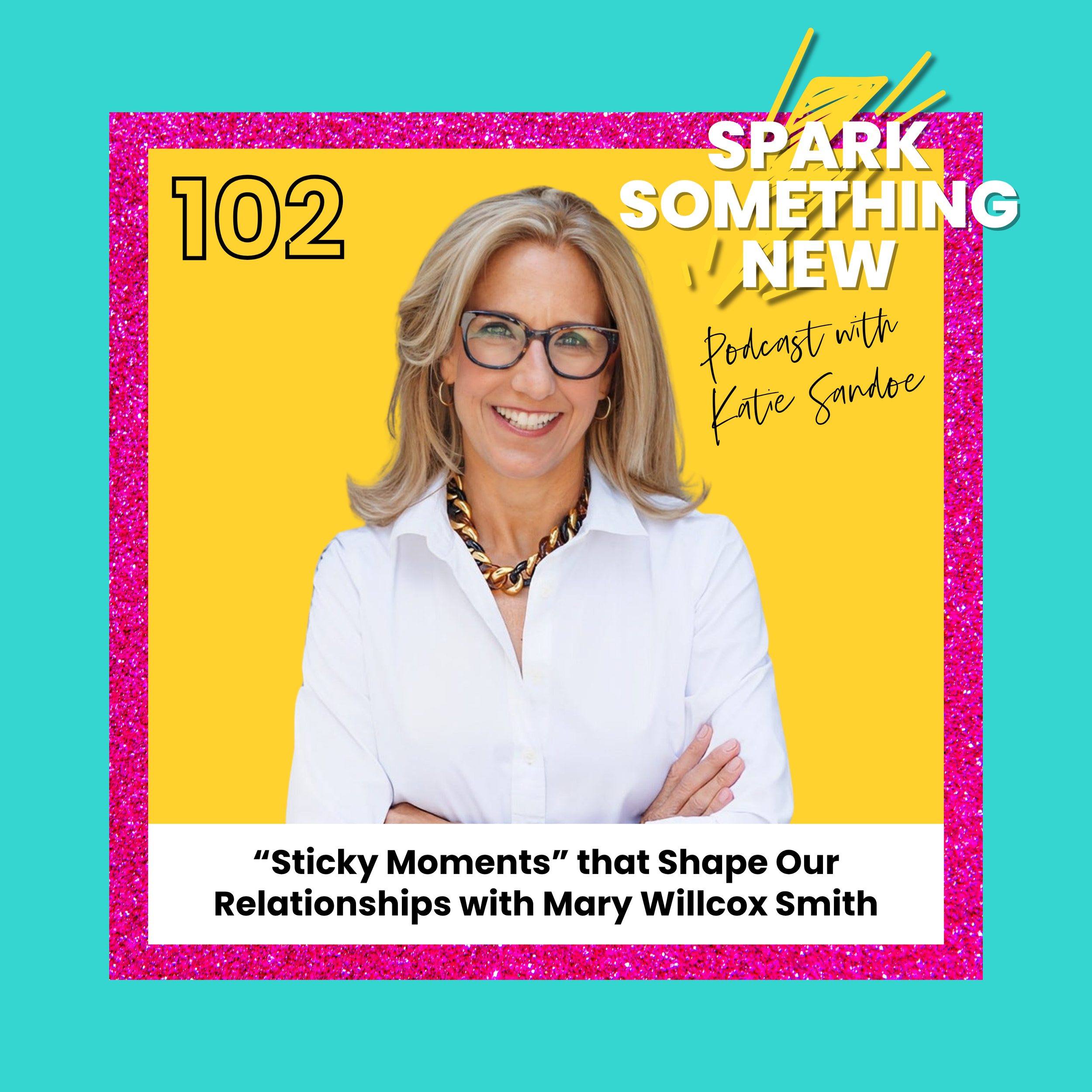
Episode 102: Sticky Moments that Shape Our Relationships | Mary Willcox Smith
We want to get it right with the people who matter most.
We try to be the supportive partner, the good parent, the thoughtful friend, the leader who knows what to say when things get hard.
And then… we’re human.
We lose our patience. We react instead of respond. We say the thing we wish we could take back. Or our face says the thing even when our mouth doesn’t. And then we worry we might have damaged the relationship.
But according to Mary Willcox Smith, those mistakes aren't necessarily what define our relationships. What matters more are what she calls sticky moments—emotionally charged interactions with people who matter to us that, when repeated over time, can shape what we believe about ourselves, other people, and our relationships.
In this episode, Dr. Katie Sandoe and Mary explore how these moments show up not only between parents and children, but in marriages, friendships, workplaces, and leadership.
They talk about why we struggle to access the best version of ourselves when emotions are high, why accepting someone’s experience doesn't mean agreeing with their behavior, and how connection and accountability can exist at the same time.
And perhaps most importantly, they explore what happens when we get the moment completely wrong. Because the screw-up doesn't have to become the sticky moment. The repair can.
Key Learnings:
1. Not every moment carries the same weight.
Sticky moments happen when emotion is high, someone important to us is involved, and a message is reinforced over time. Those messages—spoken and unspoken—can begin shaping how someone sees themselves and what they expect from the relationship.
2. When we're activated, good intentions aren't always enough.
We can know exactly how we want to show up and still react differently when stress takes over. Mary shares simple microsteps that can interrupt those automatic patterns and give us another response to reach for when emotions are running high.
3. Accepting isn't agreeing.
One of the simplest ways to create connection is to let someone know, I see you. I hear you. That doesn't mean agreeing with their choices or abandoning a boundary. We can validate someone's experience while still holding them accountable for their behavior.
4. “I see you. I’ve got you. You’ve got this.”
Mary's framework combines connection, boundaries, and trust. We can acknowledge what someone is experiencing, provide the steadiness and structure they need, and then give them enough space to discover that they can handle hard things.
5. Repair can become its own sticky moment.
We're going to mess up. Mary argues that resilience isn't built by eliminating every rupture, but through what happens when we come back together. Taking accountability, reconnecting, and repairing can create a powerful moment of its own.
LINKS & Resources:
Mary's Website: marywillcoxsmith.com
Connect with Mary on LinkedIn
Mary's Book: The Micro Step Method
GUEST INFO:
Mary Willcox Smith is a keynote speaker, parenting expert, author, and creator of the MicroStep Method, a practical approach designed to help people navigate the small, emotionally charged moments that can have an outsized impact on relationships.
Drawing from research, lived experience, and her work with parents, Mary helps people move beyond perfectionism and self-blame and instead develop simple, repeatable tools they can access when stress is high and good intentions aren't enough.
She is the author of The MicroStep Method for the Overwhelmed Parent: Small Moments, Big Impact, and her work explores how small shifts in everyday interactions can build greater trust, resilience, confidence, and connection over time.