What’s your story?
Have you ever been asked that question? Or perhaps some variation of it? Take a moment and think about what comes to mind. What stories would you share? And what might those stories reveal about what's important to you, how you see yourself, or what you want someone else to know about you? I find this absolutely FASCINATING.
In fact, storytelling has been central to my work, research, and life for decades. Heck, my doctoral dissertation explored the power of stories to inspire women to become activists for causes they care deeply about. And a few years ago, my word of the year was STORY. So, whenever I met someone new, instead of asking the usual questions about what they did for work or where they lived, I'd ask: "Tell me a story that will help me know about you." Y'all, the responses were incredible! Some people shared stories from childhood. Others talked about a defining moment in their career, a family tradition, a heartbreaking experience, or something wonderfully ridiculous.
But what intrigued me most wasn't necessarily the story itself. It was the CHOICE to tell that particular story. Of all the experiences they'd had, all the memories they carried, and all the things they could have shared, why THAT story? And that's something I've come to believe more deeply over the years: The power isn't only in the story. There's enormous power in the choice to tell it.
Think about history. Much of what we know about our collective past has been shaped by those who recorded it. They chose which events mattered, whose perspectives were included, what details were emphasized, and what was left out. Those choices have influenced how generations understand the world.
Think about raising children. From the time they're tiny, we read them books and tell them stories. We pass along family traditions, share lessons from our own experiences, and help shape how they understand themselves and the people around them.
Or think about leadership. Your organization's origin story, its vision, the values it celebrates, and even the stories people tell about what happens behind closed doors all influence the culture you're creating.
We're storytelling creatures. It's one of the ways we make meaning of our lives and understand the world. And we're telling stories ALL THE TIME. Sometimes they're stories about ourselves. Who we are, what we're capable of, what we've survived, and what we believe is possible. Sometimes they're stories about other people. You know, like that employee who doesn't seem particularly motivated because they rarely take initiative. Maybe that's true. Or maybe there's an important part of their story we don't know yet.
And believe me, I'm guilty of this, too! I'm a GREAT storyteller, which occasionally gets me into trouble when I start filling in the blanks without bothering to check whether my assumptions are actually true.
But there's another dimension of storytelling that I think deserves our attention: The stories we choose NOT to tell. The layoff that shook our confidence. The relationship that ended. The mistake we're still embarrassed about. The loss we're struggling to make sense of. Or perhaps it's something wonderful. A small moment of joy, a dream we're afraid to say out loud, an accomplishment we downplay because we don't want to seem boastful.
Sometimes we don't tell these stories because we think they're insignificant. Sometimes because they feel too vulnerable. And sometimes because we're still figuring out what they mean.
And that's okay. Not every story needs an audience, and certainly not every story needs to be shared before we're ready.
But I wonder how many meaningful stories remain untold because we've convinced ourselves they aren't worth telling.
Because here's what I've learned: Sometimes the greatest gift of sharing a story isn't what it gives the listener. It's what happens within us when we choose to tell it. We might find meaning in something that once felt meaningless. We might recognize our own courage. We might discover that someone else has walked a similar road and suddenly feel a little less alone. Or maybe we simply get to celebrate something beautiful that we almost let pass without acknowledgment.
So, my friend, I want to leave you with a question: What's a story you've almost told... but haven't?
And what might become possible if you gave yourself permission to tell it?
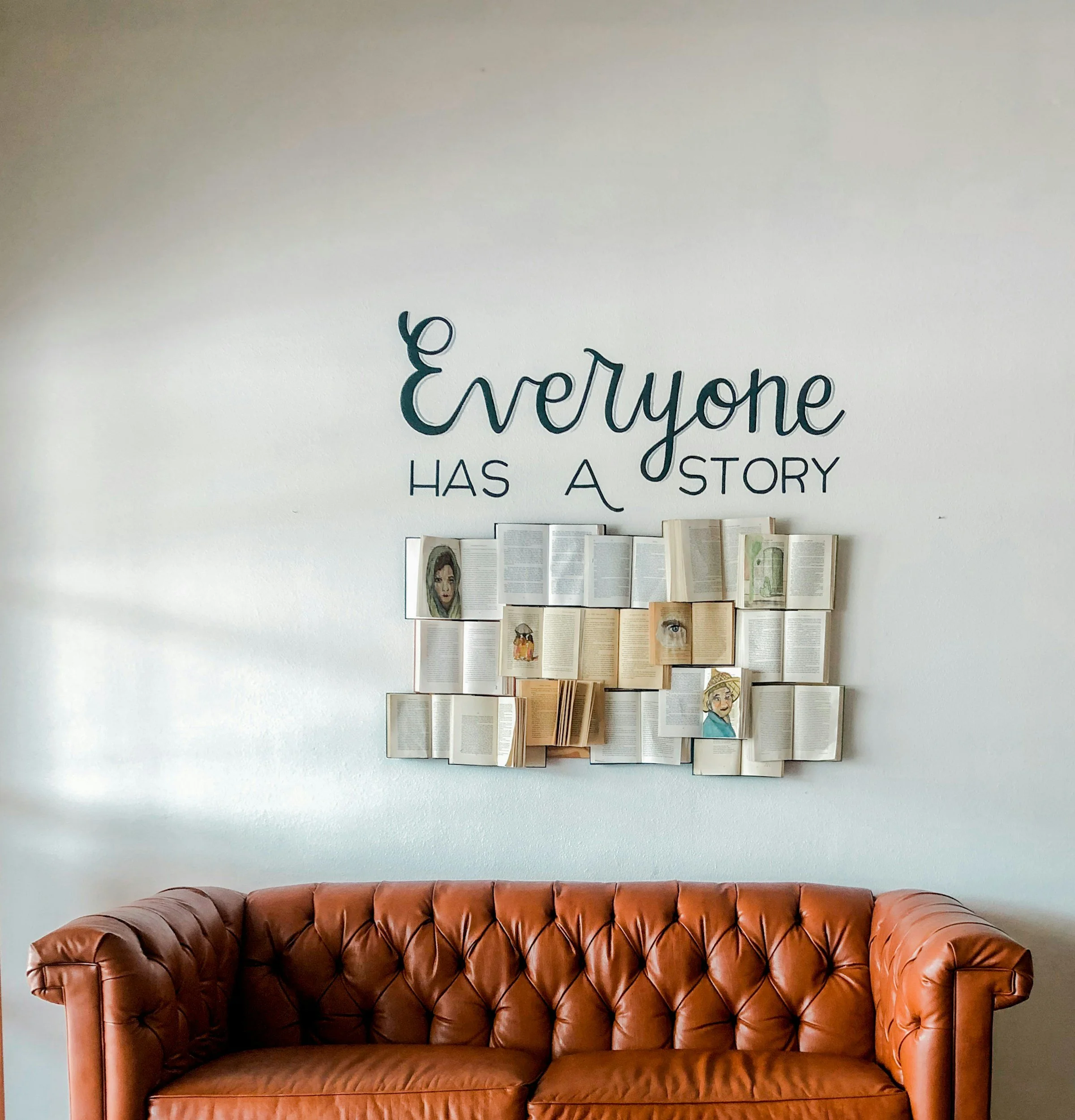
Tell the Story
Think about a story you've been carrying that you haven't shared. It doesn't have to be dramatic, profound, or even particularly interesting to anyone else. It just has to matter to YOU.
Then ask yourself:
Why this story? What makes it meaningful to me?
Why haven't I told it? Is it fear, vulnerability, uncertainty, or simply that I haven't made the time?
What might telling it give me? Perhaps clarity, connection, celebration, healing, or simply the joy of remembering.
Now, here's your invitation for this week: Tell it.
Share it over coffee with a friend. Write it in your journal. Tell it to your partner, child, or someone who might benefit from hearing it.
And if you're not ready to share it with anyone else, that's okay, too. Start by telling it to yourself.
The goal isn't to become a better storyteller.
It's to recognize the power you have as the person who gets to choose which stories you tell.